Getting to Amsterdam
- Global Home»
- Amsterdam»
- Getting to Amsterdam
Amsterdam ranks as one of the most well-connected cities in the world, with a wide gamut of options for travelling here, such as air, ferry, train and car. This article will give a brief overview on each of these alternatives.
By Air
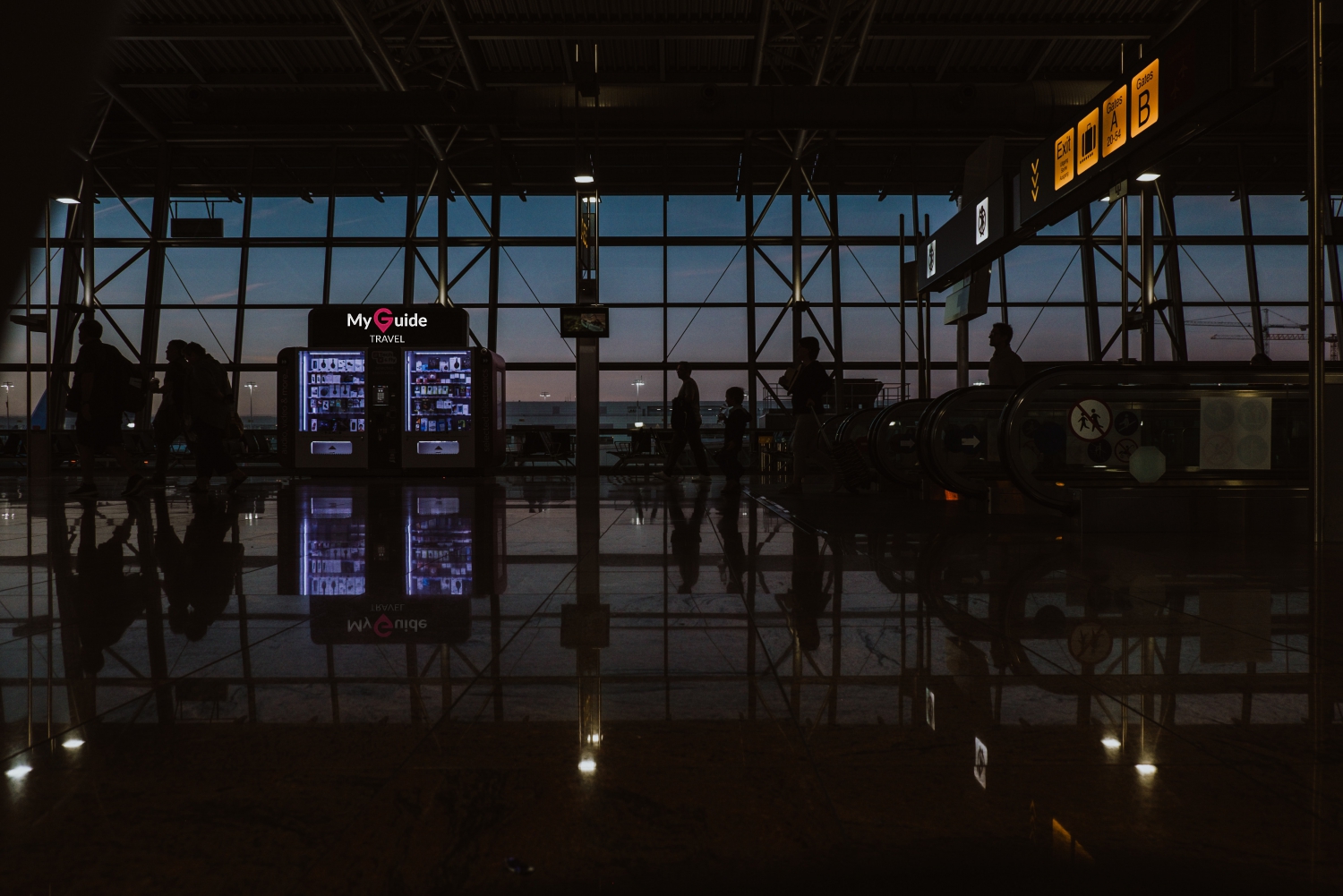
Schiphol Airport is the airfare hub of Amsterdam, with flights arriving and departing from/to all over the world. Skyteam carriers, Delta Airlines, Air France-KLM are predominant here, as are other low-budget carriers such as Easyjet, WizzAir, Vueling and Transavia. Another popular option by air is Ryanair, which leaves from specific locations in Spain, France, UK, Italy, Ireland and Portugal to arrive at Eindhoven. From Eindhoven, one can take a train towards Amsterdam. A cheap means of air travel, costing anything from 30 euros or more, Ryanair is a popular choice with many travellers who are on a budget.
Moving on, the fact that Amsterdam is a highly popular destination and Schiphol airport is one of the busiest airports in the world means that one needs to plan ahead to get cheap airfare. With a range of options, it pays to check with a number of airlines before reaching a decision, as does the fact that the earlier booked, the better. The national carrier for the Netherlands is KLM, who merged with Air France.
|
By Ferry
If you’re arriving from the UK, a leisurely, albeit time-consuming, option of travel would be one of three different ferries. Starting from Harwich in England to the Hook of Holland, the ferry will take up the major part of a day to get you to the Hook, from where you need to take a train to get inside Amsterdam. The journey goes somewhat like this: you take an early morning train from London to Harwich, from where you take a Stena’s Line daytime ferry (there are other options too) to the Hook of Holland. Finally you take a Dutch train to Amsterdam, arriving in the city before dusk.
Another option, if you’re not in London, is the Newcastle-Ijmuiden ferry that departs at 5pm in the evening, arriving in Amsterdam at 9:30 pm. Finally, there’s also a ferry leaving from Dover to Calais (France), which is a great option in case you’re planning to drive all the way to Amsterdam. Take your car to the ferry boarding at Dover, which will take you to the nearest port across the English Channel. Once you’re there, you may reach Amsterdam via any route you please. The happy part is that the ferry option is considerably cheaper than any other travel option.
|
By Train
This is another popular option for inter-city travel within Europe, as major cities like London, Brussels, Paris, Hamburg, Berlin and Amsterdam are connected to each other. Within Holland itself, no destination is more than 2½ hrs away from Amsterdam, so in case you’re hoping to spend the morning in Rotterdam, with plans to reach Amsterdam, you’ll be there by afternoon. To ensure a cheap rail travel, it is highly recommended to book well in advance. A variety of rail passes and discounts are also available so keep an eye out for those. For those Brits wanting to travel by train the Eurostar is another feasible option, starting from London till Brussels (Belgium), from where you can take another train towards Amsterdam Central Station.
|
By Bus
While getting to Amsterdam via bus, you could opt for the Eurolines bus services, which provide a cost-effective and comfortable transportation to the city. Prices start from as low as 19 pounds for a one-way travel, with free luggage and check-in services. On a daily basis, there are almost six services departing for Amsterdam from a myriad of cities throughout Europe (Berlin, London, Danzig, Cologne etc.). The arrival point is the Amstel train station, from where you can easily hop on to a tram, inter-city bus or taxi to your destination. If you’re coming from UK, the Eurolines service uses the Eurotunnel. Bear in mind though, that internal long-distance bus services within the Netherlands are almost non-existent and the few that do operate, do not facilitate Amsterdam in their route.
|
By Road
First and foremost, it is not recommended to travel within Amsterdam via car, mainly due to traffic congestion and high parking rates. Amsterdam is predominantly a pedestrian-oriented city, with cyclists taking the second place and cars bringing up the rear. Also, driving is far from being the quickest way to get around in Amsterdam, the laurel for that is proudly claimed by cycling. Here are some quick traffic stats to bear in mind while driving:
• The Dutch drive on the right side of the road.
• Speed limit is 30 km/h in residential areas, 50 km/h in the city, 80 km/h on secondary roads and 100-120 km/h on motorways.
• Speed cameras are generously spread across the city, so it’s not advised to speed; more often than not, you will be caught and heavily fined, up to 660 euros.
• Bikers and pedestrians occupy the high rungs in the transport ladder; they are everywhere and always have the right of way. The worst part (for a car driver) is that they know it.
|
Amsterdam Parking
This is another disheartening aspect about driving in Amsterdam. There’ a scarcity in parking and none of it is free. In the inner centre, parking is likely to be equally, if not more expensive than your daily food expense. At 5 euros per hour and more, the parking rates literally burn holes into your pockets. Some hotels do provide free parking facilities for their guests; remember to pray for the hotel owner’s long life for such a godsend if you do chance upon such a hotel. Otherwise, head for the garages or street parking, where you may get slightly lower rates. Certain measures to be followed in case you do end up using parking facilities:
• The parking facilities use machines that DO NOT give back change, so make sure you have the exact change.
• If you’ve hired a rental car, make a note of its registration plate somewhere; some machines tend to ask that.
• Ensure that the ticket is up to date and prominently displayed on the windows.
• The Dutch parking police do not follow Indian standard time, and are quite punctual when it comes to charging you for late parking etc. so it’s best to avoid negligence.
• Break-ins can happen in Amsterdam, so it would be wise to put a ‘No valuables inside’ warning behind the windows, as long as you don’t proudly display your GPS navigation system nearby on the dashboard.
|
Park and Ride
Perhaps the only saving grace for driving in Amsterdam are the Park and Ride (P+R) facilities, which are located in the outskirts of the city. As a reasonably priced system that also includes free transport for up to 5 persons via public transportation, P+R car parks are located in six locations on the edge of the city. Look out for the P+R signs on the ring road while you’re coming to Amsterdam. The general cost is 6 euros per day for the first four days, which increases to 16 euros per day after that. A good way to avoid the extra charge is by simply driving out of the P+R after the first four days, only to drive back in, thereby starting the clock afresh. Along with the low rate, you also stand to receive free public transportation day passes for up to 5 people. In case you prefer cycling, two bikes wait at the Sloterdijk and Olympic Stadium P+Rs, so make sure you check into those. |
Amsterdam Photos
-
De Bijenkorf - Amsterdam
-
Exploring the Amsterdam Canal...
-
Noorderkerk - Amsterdam
-
Oude Kerk - Amsterdam
-
Fo Guang Shan He Hua Temple
-
Red Light District - Amsterdam
"Not all those who wander are lost" - J. R. R. Tolkien
Nearby: Essex, London, Paris, York, Isle of Wight, Bristol, Guernsey ... See all 92 Destinations
My Destination