
Country Facts
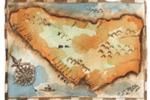
Barbados measures 21 miles long by 14 miles wide, 166 square miles and is divided into 11 parishes. The geographic coordinates are: 13º 10 N, 59º 32 W. It is the most easterly of the Caribbean islands, standing in splendid isolation as a proud sentinel at the gateway to the West Indies. By air it is approximately 4.5 hours from New York, 3.5 hours from Miami, 5 hours from Toronto and 8 hours from London. The closest sister islands, St. Vincent and The Grenadines and St. Lucia, are only a half hour plane ride away.
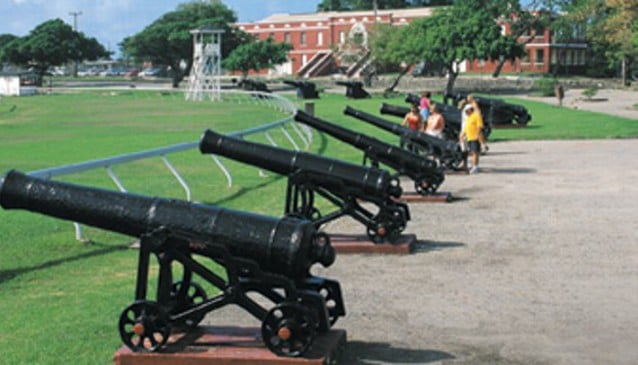
Barbados' capital city and main shopping centre is Bridgetown. Bookings through your hotel front desk can be made for an inexpensive and convenient shuttle service which operates between hotels and Bridgetown. On June 25 2011, 'Historic Bridgetown and its Garrison' was inscribed on the UNESCO World Heritage List. There is no other higher form of recognition for a heritage site in the World. Why? Here are some interesting & extraordinary facts to know about Bridgetown:
- During the 17th -19th centuries, Bridgetown was the nucleus of Trans-Atlantic trade & served as the headquarters of both the British Royal Navy and Army
- It is home to the third oldest Parliament in the Commonwealth - In Bridgetown's Trafalgar Square, Lord Nelson's bronze statue pre-dates its counterpart in London's Trafalgar Square by some 30 years.
- The fountain also in Trafalgar Square, built in 1865, commemorates the introduction of piped water in Bridgetown.
- The Jewish synagogue is the oldest in the western hemisphere. At 350 years, it's older than any synagogues in Europe and the Western Hemisphere.
- The screw dock is the last of its kind in the world.
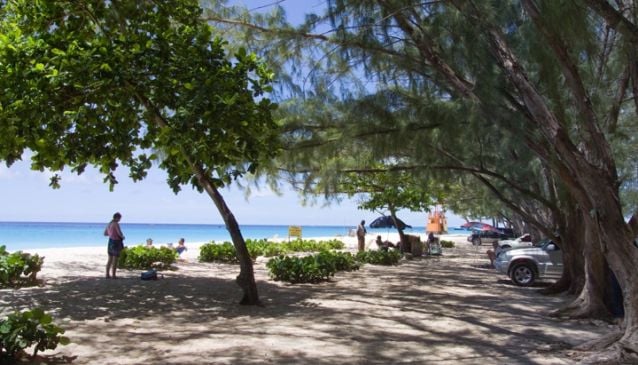
The weather is generally consistently sunny and warm, over 3000 hours of sunshine, and constantly cooled by the north-east Atlantic trade winds.
This wonderful tropical combination of sun and sea breezes is probably the secret to Barbados' popularity with its 500,000+ international long stay visitors annually! Average daytime temperatures range between 24 - 29 °C (80 - 85 °F) with summer temperatures, from June - October, rarely exceeding 32 °C (90 °F). September and October tend to be the rainiest period in the year with the warmest temperatures. Comfortably cooler temperatures, especially in the evenings, are experienced from December - March.
For detailed weather information, see our weather page.
115/230 volts 50 cycle. Standard plug types in Barbados are the same as North America, two flat blades or flat blades with a round grounding pin - most hotels provide converters for European or Asian appliances. Barbados boasts one of the best supplies of pure drinking water in the world. The water service in Barbados is reliable and the water supply is safe and refreshing to drink straight from the tap.About 25% of the rain water seeps through the porous limestone coral cap where it joins the vast underground lakes and rivers waiting to be pumped back up again for use. The coral not only takes out the impurities but it also adds nutrition in the form of minerals.
English is the official language, although you will often hear the Bajan dialect spoken island wide.
The population is approximately 287,733 (July 2012 est.). People of every hue and shade fill the streets. A short but open-eyed stroll through the streets of Bridgetown will readily reveal the wide variety of people who all co-exist peacefully and share a mutual desire for harmony in this "melting pot" known as Barbados. The ethnic mix consists of: 93% African descent, 3% European, 1% Indian and Asian and 3% mixed race.
Average life expectancy is 77 years for both males and females, however, a significant and interesting fact is that Barbados has the second highest number of centenarians in the world (per capita). This comes as no surprise as the locals living on an island where healthy existence is readily available to all- body warming sunshine, sufficient rainfall to supply pure drinking water and enrich the soil, a year round supply of local fresh fruits and vegetables, poultry, meats and fish; an outdoors, exercise-oriented lifestyle and a positive attitude towards leisure and play.
Barbados is composed mostly of coral limestone rock and surrounded by reefs which protect the very calm and low lying West Coast and South Coast from currents and rough waves. The middle of the island arches upwards, and the Northern centre of it is home to the highest point in the island, Mount Hillaby, at 336 m or (1,102 ft) above sea level. Progressing from here towards the North, South or West, the land descends gently to the surrounding coastlines, crossing a series of coral steps or terraces. These terraces are former sea cliffs and represent the various levels of the ocean during the creation of the island. The land to the East drops more steeply, but the old sea cliffs are still very much in evidence.
At the birth of Barbados, the land rose gradually out of the sea when earth movements pushed two plates together and literally forced the ocean floor to beak the surface. This in itself distinguishes Barbados from the other Caribbean islands, the vast majority of which are volcanic. This result of all this tectonic action is a mixed topography of flat table land, gentle undulating hills and steep cliffs, all criss-crossed with an intricate pattern of gullies, so clearly visible from the air. It is this unexpected broad spectrum of strikingly contrasting coastal scenery, countryside panoramas and mood so neatly packaged in a compact orderliness, that makes Barbados so very special.
The Barbados dollar is tied to the US dollar at a fixed rate of US$1.00 = BB$1.98 include both buying and selling $2.02 and US currency is readily accepted everywhere on the island. The rate of exchange for all other currencies varies with the rates against the US dollar and is listed in the daily press and at BusinessBarbados.com. Or try our online currency converter.
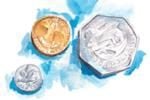
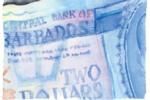
Barbados' coins come in 1, 5, 10 and 25-cent pieces as well as silver dollars. On May 2, 2013, The Central Bank of Barbados issued new redesigned banknotes. All denominations of Barbados banknotes are the same size and each has its own colour: $2 (blue), $5 (green), $10 (brown), $20 (purple & maroon), $50 (orange and teal) and $100 (grey, maroon and blue). Each denomination also features a different outstanding Barbadian on the upper face of the bank note: $2 (John Redman Bovell), $5 (Sir Frank Worrell), $10 (Charles Duncan O'Neal), $20 (Samual Jackman Prescod), $50 (Errol Barrow) and $100 (Sir Grantley Adams).
Most hotels, restaurants and large stores accept major credit cards and travellers' cheques (some may require your passport as ID). Smaller businesses may not have credit card facilities so do have cash on hand either local, US dollars or pound sterling. Buses and taxis do not accept credit cards, and if using these transport methods you may wish to read more about fares here.
The economy is based on the following sectors: tourism, business, financial and general services, agriculture and manufacturing. After gaining independence in 1966, Barbados has since created a sustainable economic platform based on a commitment to educating its people (state-sponsored education is free up to tertiary level) which has produced a deep talent pool; significant investments in physical infrastructure (highways, utilities, ports etc.) and engagement in global trade in goods and services (tourism, financial services and business etc.).
Barbados has a desirable and high quality of life and in 2005, it was ranked 5th in the Americas by the Economic Intelligence Unit's Quality of Life Index.
Barbados is four hours behind GMT. When the UK and Europe have Summer time, Barbados is five hours behind.
In hotels and resorts, 7.5% VAT (Value Added Tax) and 10% service charge will be added to your bill while in restaurants, shops and supermarkets, 17.5% VAT is included in all prices.
Many restaurants automatically add a 10% service charge to your bill, so it would be wise to check before tipping additionally. In the case where tipping is not included in the bill, 10% - 15% is acceptable.
When arriving in Barbados, the porters (called Red Caps) will offer collect and carry your luggage, tips will be expected. Red caps are entitled to US$2 per item of luggage.
The International direct distance dialing code for Barbados is the same as North America, i.e. +1. The area code is (246) which is followed by a seven digit local number.
The World Economic Forum's 2009-10 Global Information Technology Report ranked Barbados 1st in the Latin America and the Caribbean for its network readiness. The telecommunications infrastructure is robust enough to ensure uninterrupted connection between parties across the globe. Barbados also ranked 2nd in the hemisphere for availability of latest technologies in the 2009-10 Global Competitiveness Report. Thus the latest in fibre optic systems, digital technologies, international direct dialing, facsimile transfer, satellite telecommunications, internet and e-mail services, as well as express mail and courier delivery are all available.
Visitors who bring their cell phones with them on holiday must remember to ensure the roaming feature is activated prior to arriving in the island. Please note that receiving and making international calls on your mobile phone can be quite costly and you may wish to explore the alternative of renting a cell phone locally - contact either Digicel www.digicelbarbados.com or LIME www.time4lime.com
Directory assistance can be reached by dialling 411.
The Barbados educational system is modelled after the British system. It is considered to produce one of the highest standards of education in the English Caribbean with the literacy rate of Barbados being an extremely outstanding 99.7%! School is compulsory up to age 16 and government schools are free at the primary and secondary levels. Education institutions at the post secondary level include colleges, vocational and technical training schools and a university, the University of the West Indies. There are also special schools for the mentally and physically handicapped.
In1627, Barbados was settled by the British who created a House of Assembly in 1639, thus establishing the 3rd oldest parliament in the world and building a strong foundation for a long future of political stability. Barbados has remained a British colony until its independence on November 30th, 1966. A new Barbados constitution was drawn up in agreement with the British Crown and this was approved and accepted by the Parliament of Barbados. Part of that constitution decrees that Her Majesty, the Queen of England, shall be deemed the titular Head of State of Barbados and be represented here by a Governor General. As such the island remains a member of the British Commonwealth.
Barbados retains the Westminster-style parliament, with executive authority being vested in the Prime Minister and Cabinet, who are collectively responsible to Parliament. The Parliament consists of a Senate, House of Assembly, with the members of the latter being elected by the people on the basis of universal adult suffrage.
On October 23, 2010, Freundel Stuart was sworn in as the current and 7th Prime Minister of Barbados.
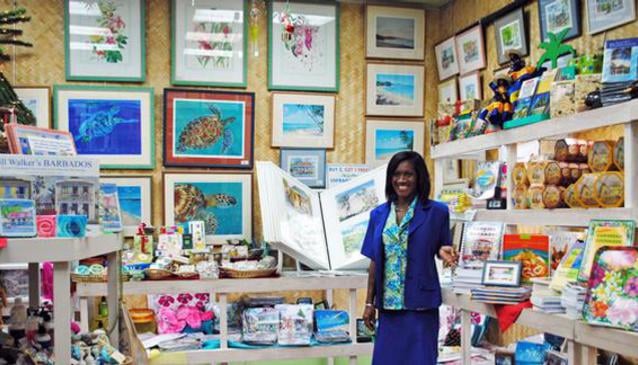
Banks are generally open Monday to Thursday from 8am-3pm and Friday 8am-5pm. Shops in Bridgetown are open Monday to Friday from 8:30am-4pm and 8:30am-1pm on Saturdays. Malls and out-of-town shops and boutiques usually open from 9am-5pm (Mon-Fri) and 9am-2pm on Saturdays. Most shops are closed on Sundays, although some supermarkets and convenience stores remain open.
Click here to download the complete Barbados country factsheet.